What “Development” Leaves Unsaid in Bắc Giang
Bắc Giang casino development language can turn a countryside vision into a story of change. Learn how to read its framing without mistaking imagery for local experience.
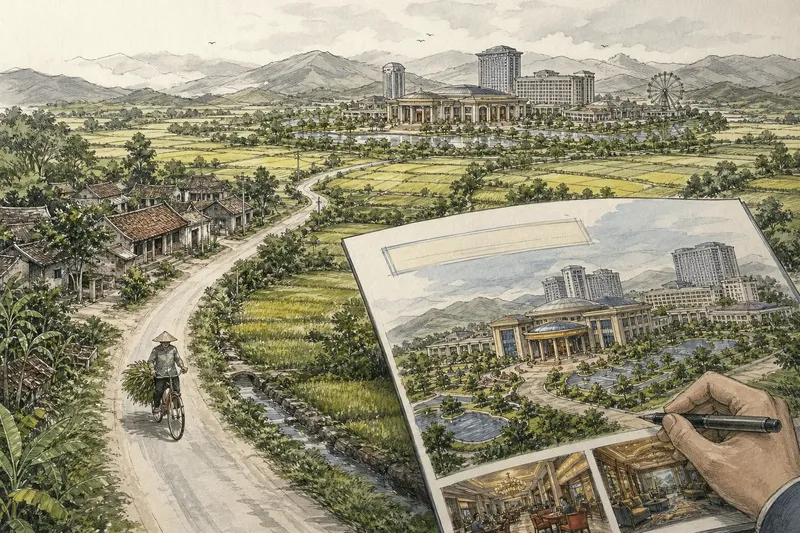
Bắc Giang casino development language can turn a countryside setting into scenery for a promised visitor destination. The words may shape how readers imagine local change before they know which places, people, or activities the story actually describes.
That framing matters because a casino-led narrative can make a rural landscape seem like an empty stage awaiting transformation. Careful reading can instead keep the landscape visible as a lived place, without assuming what residents think or how a proposal would affect them.
Countryside as Setting
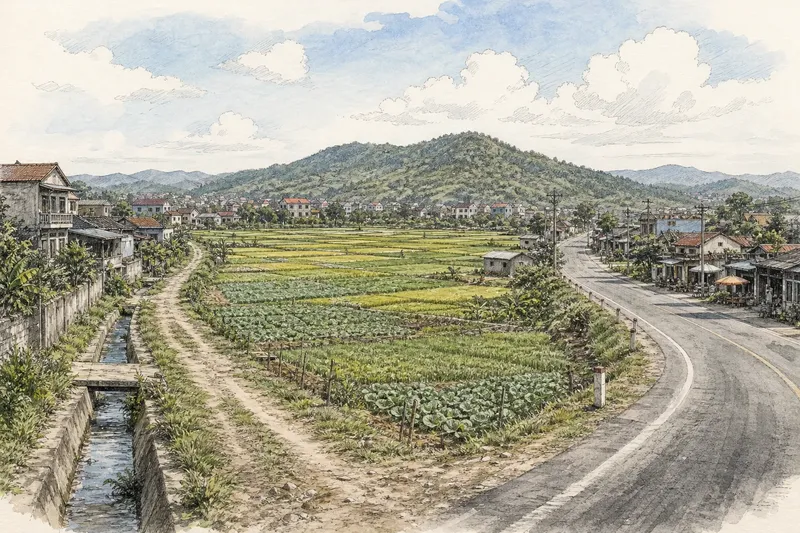
Descriptions of fields, village edges, and roads often give a development story its sense of place. Yet a scene described for visitors may omit the routines and work connected to that same landscape.
Notice whether the account names a place and explains its role, or uses rural imagery simply to suggest calm, tradition, or escape. Those are different kinds of description: one offers context, while the other uses atmosphere to shape an audience’s expectations.
Ask what the landscape is doing in the story: is it described as a place with its own life, or as a backdrop?
Casino Storylines
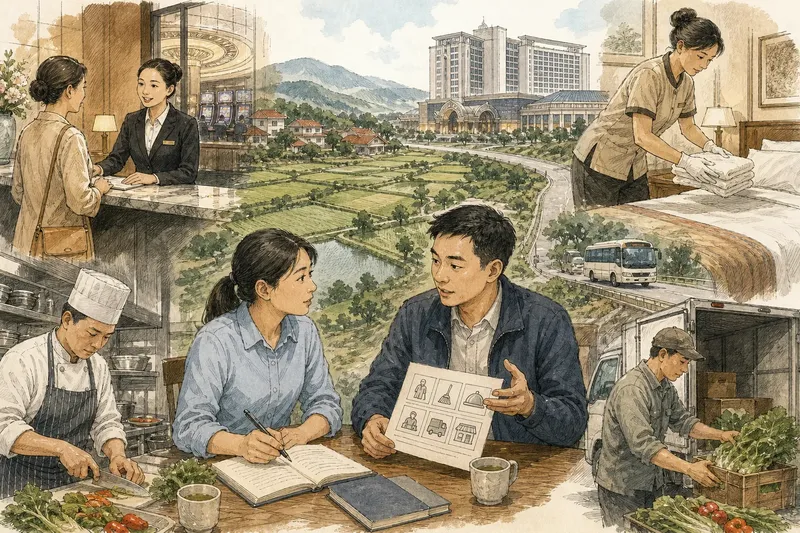
“Casino-led” can organize a larger vision around gaming, with hospitality, dining, entertainment, or transport appearing as supporting parts. But the phrase alone does not establish which elements belong to a specific proposal.
Promotional narratives often move from a proposed attraction to an imagined destination and then to a promised new identity for a place. Read that sequence as a storyline, not as a description of what countryside residents already experience. The shift in language can be revealing even when the text gives little detail about local life.
Look for whose perspective organizes the story: a promoter’s vision, a visitor’s imagined experience, or an account of the place itself.
Public Language
Words such as “modernization” and “destination” carry values as well as descriptions. They can imply that change is progress or that attracting visitors is the natural measure of a place’s future, even when the writer does not say so directly.
That implication deserves attention, but it should not be mistaken for evidence about public opinion. A promotional phrase tells readers how its author wants the project understood; it does not tell us whether local people welcome, oppose, or feel uncertain about it.
Separate the message a phrase sends from the views of the people it may affect.
Reading Rural Imagery?
What does “destination” suggest?
It presents a place as somewhere visitors might travel to, often emphasizing an experience rather than existing local routines. The word does not, on its own, show how residents describe that place.
What does “casino-led” imply?
It places a casino at the center of a broader development idea, while leaving the surrounding facilities and local context open. Read it as a framing choice unless the account supplies more specific context.
How can rural scenery shape a project story?
It can make a place appear quiet, open, or available for a new purpose. Check whether the text also gives any account of the landscape as a lived setting, rather than relying only on its visual appeal.
Can promotional language represent local views?
Not by itself. Treat it as the position of the speaker or organization using it, and do not extend that position to residents without evidence that supports the broader claim.
A Close Reading
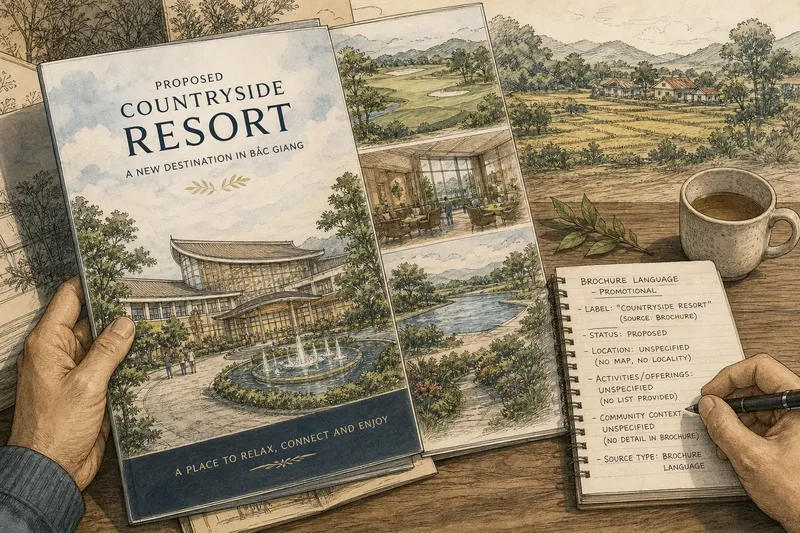
Imagine a fictional brochure describing an unnamed Bắc Giang site as a “new destination,” with a casino and lodging presented as ideas and open fields shown in an illustration. The brochure gives no resident voices or description of how the land is currently used.
Read “new destination” as the brochure’s desired identity, not as a community description. Treat the casino and lodging as ideas because the brochure presents them that way, and treat the fields as imagery rather than evidence that the site is unused. The resulting interpretation is specific: the brochure sells a visitor-oriented vision, while leaving local routines and perspectives outside its account.
When reading Bắc Giang casino development language, pay attention to who gets to describe the countryside and what the description makes visible. A story can be informative about a project’s public image while remaining silent about the place beyond that image.