A Landscape Is Not a Project Summary
Learn how to describe a Bắc Giang landscape by separating visible land features from casino project claims, giving readers a clearer picture of the place.
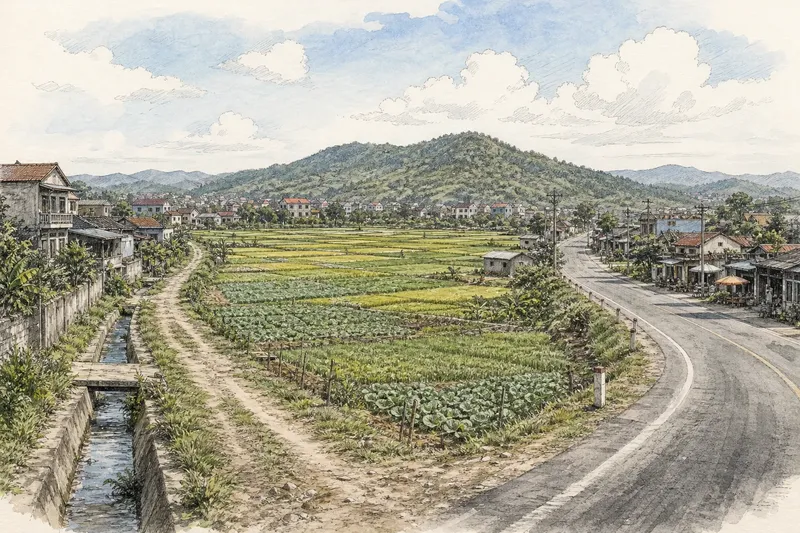
A landscape description of Bắc Giang should distinguish the land people can see from the future a casino-led proposal promises. Field edges, roads, slopes, water channels, and settlement patterns describe the present; words such as “convenient” or “underused” interpret it.
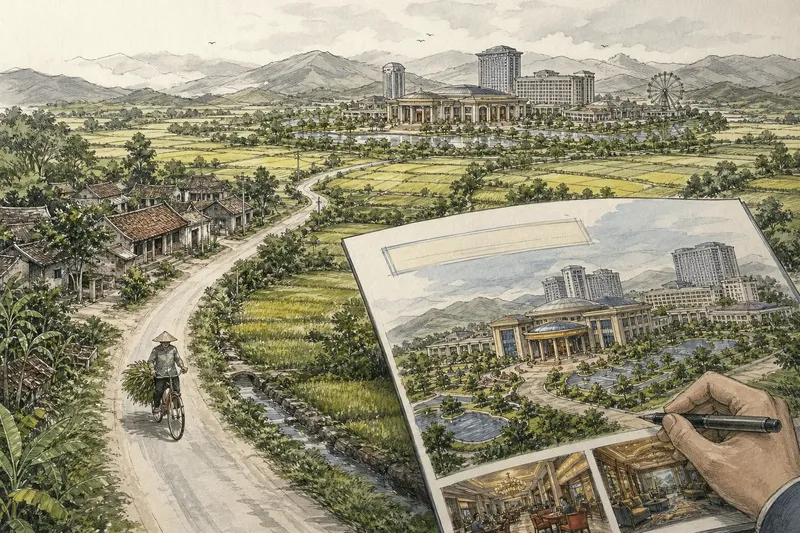
That distinction matters when a project summary turns countryside into a setting for visitors or investment. A grounded account records how the land is arranged now and identifies where interpretation begins.
Start with the ground
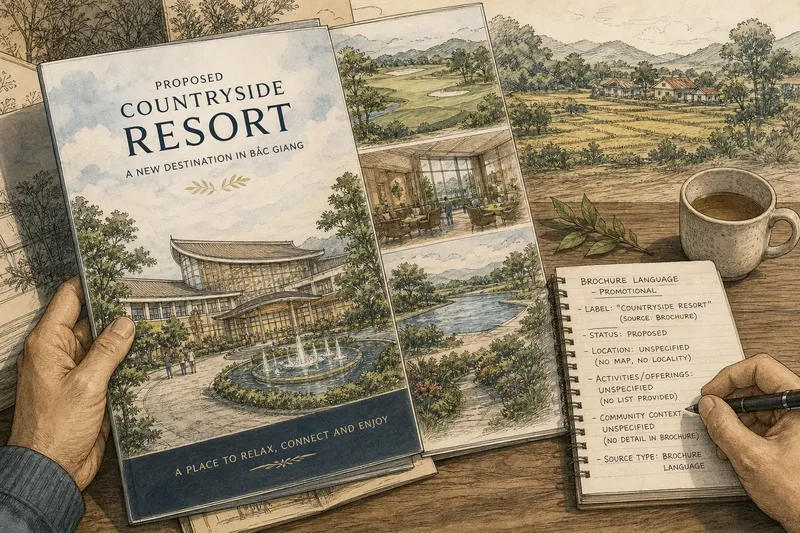
Imagine a hypothetical casino-led proposal on the edge of a Bắc Giang village. Its draft calls the site “a tranquil rural setting with open views and convenient access.” Each phrase sounds descriptive, but each combines observable details with judgment.
Suppose a walk along the proposed boundary passes cultivated plots, a drainage channel, a paved road, and a cluster of houses. A low rise partly blocks the view from one direction, while roadside buildings obscure it from another. The features are observable; “tranquil,” “open,” and “convenient” require interpretation.
Record the route, changes in elevation, watercourse, nearby land uses, and places where buildings interrupt a view. Do not turn a brief impression into a claim about the whole area.
Separate land claims
A proposal may call the same road “easy access,” a field “room for expansion,” and a slope “a scenic outlook.” These phrases point toward a possible future use, but they are not simply features of the land.
Sort the language by what kind of statement it makes:
- Observable features: If the account identifies a paved road, ditch, cultivated plot, slope, shop, or line of houses, describe where it is; if it does not give a location, ask for one before treating the detail as useful.
- Interpretations: If the wording calls a place quiet, remote, attractive, underused, or well-connected, identify the evidence and point of view behind that judgment; if none is supplied, present it as an interpretation rather than a fact.
- Project claims: If a phrase says land is suitable for visitors, ready for development, or a future resort setting, attribute it to the proposal; if the source does not explain its basis, do not restate it as an existing quality.
- Existing uses: If the description names farms, homes, shops, or paths, retain them as part of the setting; if it omits everyday uses, add only those supported by the available description.
- Unclear boundaries: If a claim does not identify which part of the site it refers to, mark the location as unclear; if a map or description supplies the boundary, use that specific area instead.
- Viewpoint: If a scenic claim names a viewing point, describe the view from there; if it gives none, ask where the view is supposed to be visible before adopting the claim.
These categories can appear together, but they should not be treated as interchangeable. A road is visible; its convenience depends on who travels, from where, and under what conditions. “Underused” is not a neutral synonym for farmland because it assigns value without explaining whose use counts.
Describe views precisely
In the hypothetical proposal, the draft promises “uninterrupted countryside views.” A more precise account says that cultivated plots are visible from one section of the boundary, while houses and roadside activity interrupt the view elsewhere.
This wording does not decide whether the setting is appealing. It tells the reader where a view exists and what limits it. If a description uses “panoramic,” ask which viewpoint supports that claim and what lies outside the frame.
Follow the observer’s position. “From the eastern track, fields extend toward a low rise” is easier to assess than “the site enjoys sweeping views.”
Read access in context
The same care applies to roads and paths. In the invented proposal, a paved road connects the site edge to a village street, but “convenient access” leaves out the route’s surroundings and the people who already use it.
Describe where the road meets the site, what land or buildings it passes, and whether it continues toward homes, fields, or other destinations. If the available description does not establish those details, state the gap instead of filling it with an assumption.
Rather than asking whether the countryside is “accessible,” ask which route the proposal means and how it relates to the existing settlement.
Questions about land claims?
What counts as a visible land feature?
A visible feature is something a reader can locate or describe without relying on a promised use: a road, plot boundary, water channel, slope, building cluster, or cultivated area. Naming it does not require claiming that it is valuable, empty, or suitable for development.
How should a description use “rural character”?
Treat “rural character” as an interpretation, then support or qualify it with details such as fields, settlement patterns, and roads. The phrase should not erase homes, shops, work, or other everyday uses.
Does a scenic view establish suitability?
No. A view describes a visual relationship from a particular point, while suitability is a project judgment that depends on its purpose and other considerations. Keep the claims separate and identify the viewpoint when using scenic language.
What if a proposal uses promotional language?
Turn each broad term into a question about evidence: what is called “open,” where is it visible, and what makes access “convenient”? If the source does not answer, attribute the wording to the proposal rather than presenting it as an established feature.
Revise the description
Imagine the writer in the hypothetical case has the draft sentence, the boundary description, and the observations from the walk. First, they mark “tranquil,” “open,” and “convenient” as interpretations or project claims. Next, they record the cultivated plots, drainage channel, paved road, nearby houses, and low rise, noting that the rise is visible from only one section of the boundary. The revised account states those features and locations, then identifies the casino-led destination as a proposal rather than a quality already present in the landscape.
The result gives readers a clearer picture without approving or dismissing the proposal. When writing about a Bắc Giang landscape, keep present features distinct from a project’s story about what the land might become; that separation helps readers assess both the place and the claims made about it.